As Ethiopia braces for another full-scale civil war and conflict in the northern regions, millions of children will be left in the crossfire of a deepening crisis.
There is an old Ethiopian proverb that says,
As porridge benefits those who heat and eat it, so does a child benefit those who rear it.
This proverb highlights the intentionality and care required to raise a child. When a child grows up in a healthy and nurturing environment, they grow up to be a blessing to their family and community members.
Regrettably, Ethiopia has drifted away from that principle. As the country once again braces for another full-scale civil war and conflict in the northern regions, the impact on children continues to be overlooked.
Brief History of the Conflict in Ethiopia
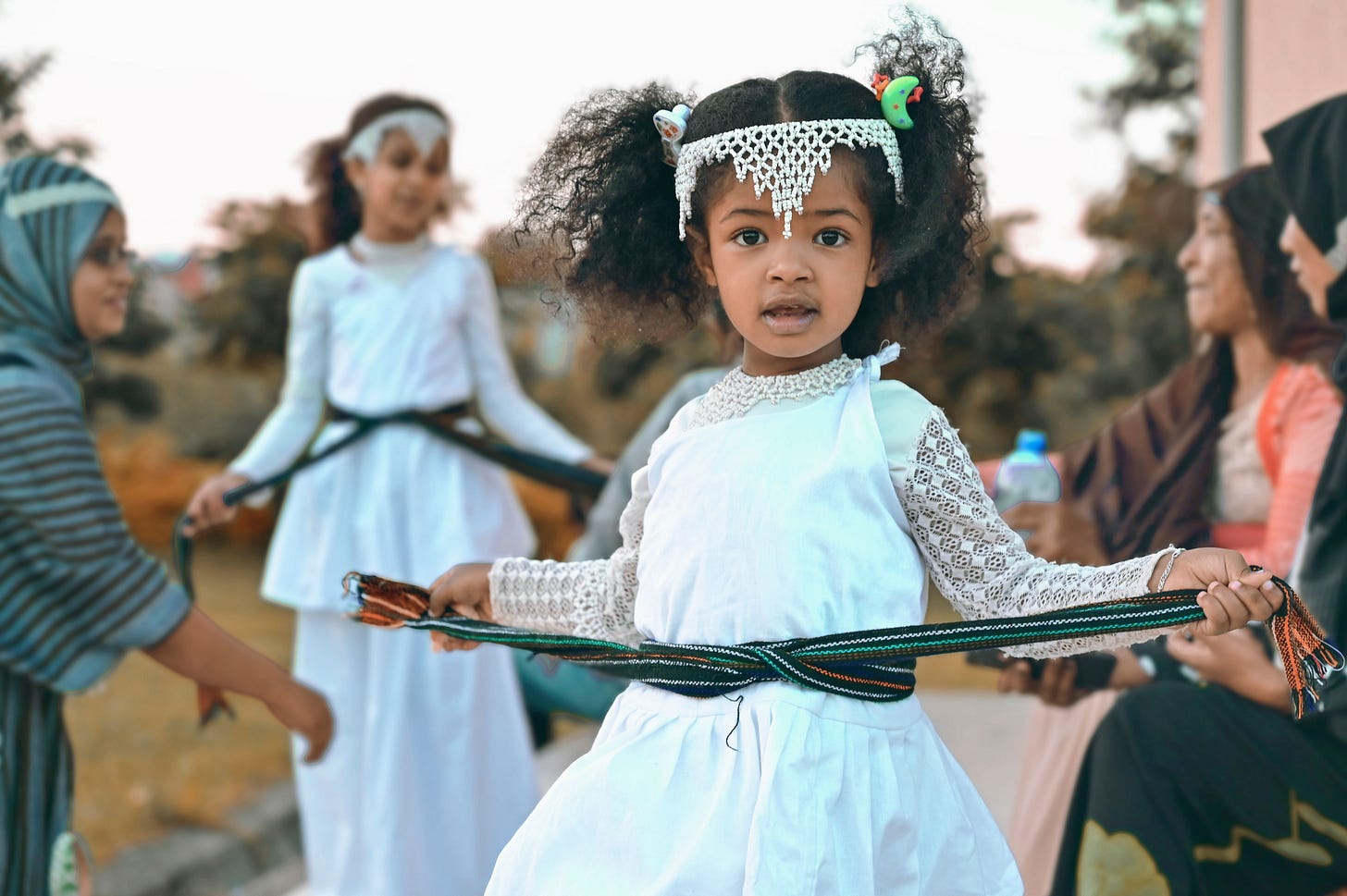
The present conflict between the Tigray People’s Liberation Front (TPLF) and Ethiopia’s federal government originally started on 3 November 2020 and ended in 2022. After nearly two years of fragile peace under the 2022 Pretoria Agreement, fighting has reignited in the north. At the same time, severe clashes between the Fano militia and the Ethiopian federal government have intensified in the Amhara region. This threatens to plunge the region into a multi-front war.
Ethiopia’s current conflict first erupted when the ruling party in the northern region, the TPLF, resisted centralizing reforms pushed by Prime Minister Abiy Ahmed. Under its 1995 constitution, the country has operated under an ethnic federalism system. Largely architected by the TPLF, ethnic federalism was adopted primarily to hold together the ethnolinguistic groups that exist across the country. However, when Prime Minister Abiy came into power and pushed for a centralized government authority, it threatened to render the almost three-decade-long federal system obsolete. Predictably, this move faced fierce opposition. What started as ethnic and ideological divisions in the country severely worsened into full-scale military conflict.
By 2023, conflict from the disengagement of the peace deal between the TPLF and the Ethiopian federal government spilled over into the Amhara region. Similar to the TPLF, Amhara’s Fano militia strongly opposed the government’s push for a centralized system. What began as sporadic skirmishes in 2023 turned into a full-blown insurgency.
As of this writing, dozens of civilians have already been killed.
Further reading: The Council on Foreign Relations (CFR) has a detailed article on the Conflict in Ethiopia that is worth reading.
Pillar I: Exploitation & Forced Labour
The Kinga Project defines child labour as any work performed by an individual classified as a child by international standards- a person under the age of 18- that may be harmful to their well-being and is exploitative in nature, such as, but not limited to, work that impedes their education, is physically, mentally, and/or socially harmful, and stifles their growth.”
According to the Ethiopian Constitution, Article 36(1) (d),
Every child has the right not to be subjected to exploitative practices, neither to be required nor permitted to perform work which may be hazardous or harmful to his or her education, health or wellbeing.
Reports from organizations and news outlets such as The Borgen Report, the BBC, and UN Peacekeeping have detailed how children were forced to do hazardous labour during the 2020-2022 conflict in the Tigray region. Alarmingly, there were reports of children as young as 15 being forcibly recruited by both the TPLF and the Ethiopian federal government to fight in their respective ranks. As the constitutional clause above highlights, the recruitment of children to participate in active combat is a violation of basic children’s rights.
As Ethiopia braces for renewed instability, there is every reason to fear that children will once again be coerced or manipulated into joining the fight. The Borgen Project reported on the extreme atrocities committed by the armed forces, including instances of youth being recruited to be suicide bombers. What happens to these children once the war ends? What will be the long-term scale of their physical and mental trauma? And will these children become the next generation of soldiers?
Deployment of minors in active combat has sadly become Ethiopia’s reality. The well-being of these children wasn’t merely forgotten when they were recruited in 2020- it was abandoned when the warring factions decided to take up arms.
Further reading: The Kinga Project’s article, "Beyond the Headlines: The Reality of Child Labour in East Africa."
Pillar II: Disrupted Classrooms
“Quality education for children, as defined by The Kinga Project, encompasses and extends beyond access to equipped and safe classrooms, essential learning tools such as books and stationery, qualified educators, and manageable class sizes.”
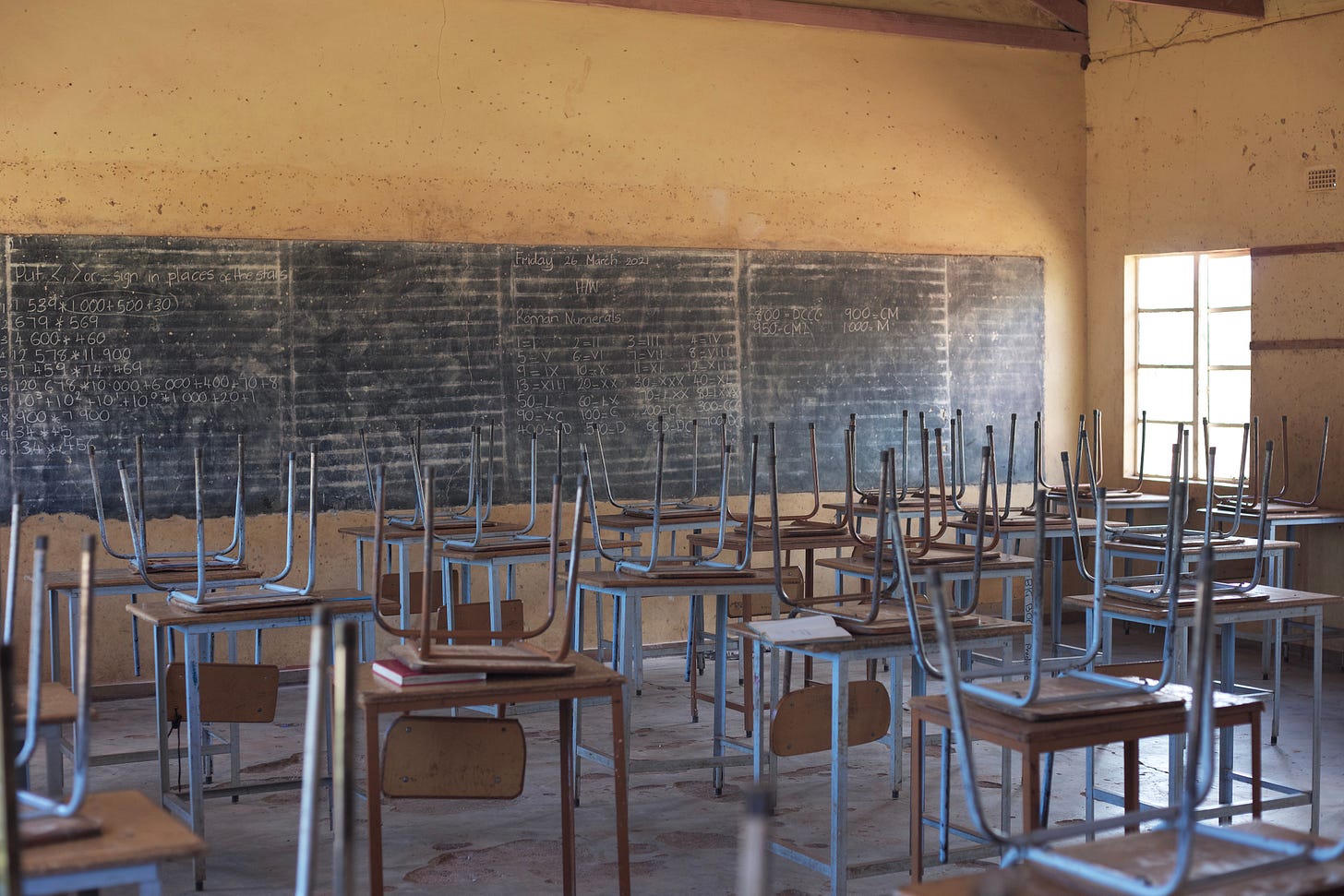
The education system across northern Ethiopia suffered severe destruction during the 2020-2022 conflict. Schools were bombed while thousands were closed and used as military bases. This left millions of children out of school for an extended period. In a 2023 interview conducted by the Malala Fund featuring three young girls, the sad reality of the conflict and resultant school closures was laid bare. One interviewee, Samrawit Taye, made a poignant observation:
I don’t think the government is unaware of what’s going on. So many families have lost everything. I believe the only way we can get out of this life is through education.
Samrawit’s words ring as true today as they did then. Education remains the best pathway out of poverty. It encourages entrepreneurship, opens better job opportunities, and according to the World Bank, “An additional year of schooling increases earnings by 10 percent a year.” The same World Bank analysis emphasizes that qualified and educated human capital is the primary factor separating developed and developing countries. If Ethiopia is to transition out of the Least Developed Country (LDC) status as classified by the United Nations, it needs to spend most of its resources and efforts on educating its youth rather than bombing the same institutions they need to learn in.
There are currently 2 million internally displaced persons (IDPs) in the country— a massive portion of whom are children living in informal camps without access to basic education.
The Kinga Project firmly holds that quality education is a right that every child should have. Children in the Tigray, Amhara, and surrounding regions continue to be robbed of this basic right.
Further reading: The World Bank’s report on “How effective education spending can reduce poverty and boost earnings”.
Pillar III: The Exploitation and Sexualization of Children
“According to The Kinga Project, the sexualization of children entails exposing individuals under the age of 18 to sexual content of any kind that is not age-appropriate educational material, whether it be through audio, print, or video format, as well as encouraging children to engage or interact with sexual activity, child marriage, or exposure to explicit material.”
Girls suffered immense rates of sexual violence during the 2020-2022 conflict. Documented cases revealed widespread rape, forced marriages, and teen pregnancies. Young girls were thrust into horrific circumstances simply because armed men were seeking to satisfy their selfish desires.
Reporting from The Guardian (link to article below) makes a clear and devastating reality: the bodies of women and children are not spared from the battlefield—they are used as active battlegrounds. The Fano militia, fighting in the Amhara region, claimed to be protecting their communities from marginalization by the Ethiopian government; however, a fundamental question remains: how does committing acts of sexual violence against women and girls constitute “protecting their communities”? Militias across both the Tigray and Amhara regions claim to be fighting the marginalization of their communities while systematically violating their most vulnerable citizens through barbaric acts of sexual violence. The Ethiopian federal government—an institution tasked with protecting Ethiopian children from “inhumane treatment”—has fared no better. According to a landmark 2021 report by Amnesty International, perpetrators of the widespread sexual violence included members of the Ethiopian National Defense Force (ENDF).
Beyond the immediate horror, there are unspoken physical and psychological consequences that follow conflict-related sexual violence. In a study conducted by Woldetsadik et al., titled “The enduring consequences of conflict-related sexual violence: a qualitative study of women survivors in northern Uganda”, it was revealed that women who endured sexual violence during war suffered from chronic reproductive issues, untreated sexually transmitted infections, severe anxiety, and depression. The findings highlight the cruelty that survivors are forced to live with many years after active combat ends.
Tragically, as conflict flares up, girls will again become victims of these same atrocities.
Further reading: The Guardian wrote a detailed article on the atrocious sexual violence Ethiopian women (and girls) had to endure during the 2020-2022 civil war.
WARNING: THE ARTICLE CONTAINS GRAPHIC ACCOUNTS OF SEXUAL VIOLENCE.
In Conclusion
As the world watches on, The Kinga Project grieves the terrible acts being inflicted upon the nearly 11 million children living in the Tigray and Amhara regions.
Pray for the children of Ethiopia. Pray that the spiritual root of war—selfish ambition and envy (James 4:1-3)—will be repented of, and that God will have mercy on the nation.
War is not good for anyone, but it is especially catastrophic for children. It robs them of a peaceful and safe environment to grow up in, denies them access to education, and violates their bodies—leaving them with a lifetime of unimaginable trauma.
- The Kinga Project
This article was originally published on The Kinga Project Substack (https://kingaproject.substack.com/). Join our Substack community for direct newsletter updates and advocacy projects.